
Looking to make home improvements, consolidate debt, or cover a major expense? A HELOC and a home equity loan are both ways to borrow against the equity in your home. The right choice comes down to how you plan to use the money.
For homeowners in Metairie, Kenner, Covington, Mandeville, Slidell, and across the New Orleans area, understanding how each option works can help you compare the benefits, tradeoffs, and questions to bring to a local lender.
What Is a Home Equity Loan?
A home equity loan lets you borrow a set amount of money using the equity in your home as collateral. You receive the funds in one lump sum and repay them over time.
Whether you are replacing a roof, consolidating debt, paying for a major repair, or funding a large home project, a home equity loan makes it easier to plan around one loan amount and a consistent repayment schedule.
For many homeowners, that predictability is the primary draw: one set amount, repaid on a schedule that is established before the loan closes.
The tradeoff is flexibility. If the project costs more than expected, or a second expense arises later, you may need a separate borrowing solution.
What Is a HELOC?
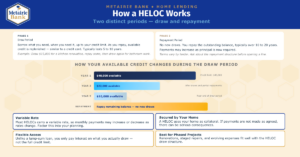
A Home Equity Line of Credit, often called a HELOC, is also secured by your home. Rather than receiving a lump sum, you are approved for a credit limit. During the draw period, you can borrow what you need, when you need it, up to that limit. As you repay what you borrow, available credit is replenished.
A HELOC tends to suit projects that unfold in stages: renovating an older home room by room, planning kitchen updates now and bathroom work later, or covering several expenses over time rather than borrowing the full amount at once.
Most HELOCs carry variable rates, which means the rate and payment may change over time. That flexibility can be useful, but payments may feel less predictable than a home equity loan with a fixed repayment structure.

Key Tradeoffs to Consider
Once you understand how each product works, the decision comes down to a few practical tradeoffs: lump sum versus flexibility, fixed versus variable rate, and a predictable payment versus one that can shift.
A home equity loan offers certainty on all three counts. You receive one lump sum, lock in a fixed rate, and carry a payment that stays the same for the life of the loan. That works well when the full cost is known and straightforward budgeting matters.
A HELOC trades that certainty for flexibility. You draw against a credit line as costs arise, typically at a variable rate, and payments can shift as the rate changes or as you draw more. That works well when the total cost is not fully known at the outset, though it requires more active management.
Borrowing habits are also worth considering. A HELOC provides the access a phased project may need, but that access can also lead to drawing more than originally planned. A home equity loan removes that variable by design, since you borrow once and repay a fixed amount.
There is no single right answer for every homeowner. The right choice matches your project, your budget, and how you manage money. A Metairie Bank mortgage lender can help you weigh those tradeoffs against your specific situation.
Common Ways New Orleans-Area Homeowners Use Home Equity
Home renovation is one of the most common uses of home equity. A property in Metairie might need an updated kitchen, while a house on the Northshore might need a new roof, new windows, or additional space. If the scope and cost are clear, a home equity loan is often the better fit. If the project may evolve once underway, a HELOC provides more room to adapt.
Debt consolidation is another frequent use. Some homeowners use home equity to combine higher-interest debt into one payment. That can be beneficial in the right situation, but it warrants careful consideration: the debt is being moved onto a loan or line of credit secured by your home.
Home equity can also cover one-time or large unexpected expenses. The more important question is whether the product fits what you are actually trying to accomplish, not simply whether you qualify to borrow. That is where a conversation with a local lender is most useful.
A Note on Risk
Both home equity loans and HELOCs are secured by your home. That distinguishes them from unsecured personal loans or credit cards and is why both options deserve careful consideration. If payments are not made as agreed, there can be serious consequences, including the potential loss of your home.
Before choosing either option, confirm how much you plan to borrow, whether the rate is fixed or variable, how payments are calculated, what fees or closing costs apply, and how the monthly payment fits your budget.
Frequently Asked Questions
What is the difference between a home equity loan and a HELOC?
A home equity loan delivers one lump sum that you repay on a fixed schedule. A HELOC provides a revolving credit line you draw from as needed during a set draw period. Both borrow against the equity in your home; the difference is how the funds are received and repaid.
HELOC vs. home equity loan: which is better?
Neither option is better in every situation. If the cost is known and a fixed repayment schedule is preferable, a home equity loan is generally the stronger choice. If costs will accrue over time, the flexibility of a HELOC may be the deciding factor. The right fit depends on your project and how you plan to use the money.
Is a HELOC different from a home equity loan?
Yes. A HELOC is a line of credit, while a home equity loan is a single, fixed amount. Both use your home as collateral, and the same risk applies if payments are not made as agreed.
What happens after a HELOC draw period ends?
Once the draw period ends, you generally move into a repayment period and can no longer draw additional funds. Terms vary by lender, so it is worth asking about this before opening the line of credit.
Talk It Through With a Local Lender
If you are weighing a renovation, debt consolidation, or another large expense, you do not have to work through it alone.
Metairie Bank’s local lenders work with homeowners across Jefferson Parish, St. Tammany Parish, and the New Orleans metro. They can help you understand how a HELOC or home equity loan fits your plans, what details to compare, and what to know before moving forward. Connect with a Metairie Bank lender to discuss which option fits your next project.